Jan. 10, 2026, 3:41 p.m. ~ Matt Hagg ~ midnight library
The Midnight Library Book Review & Analysis (2026)
2026 Update: The Midnight World Is Expanding
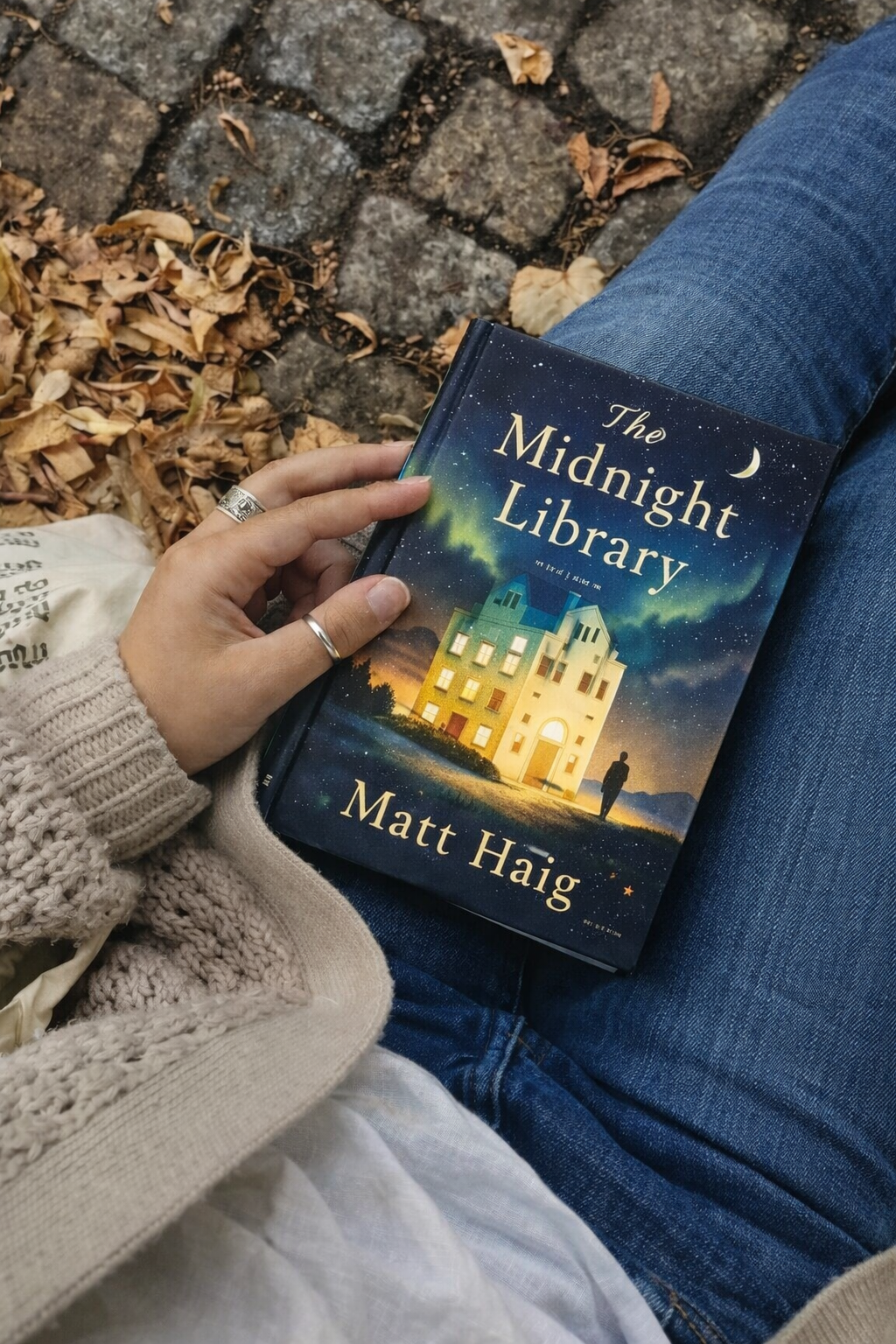
If you’ve looked up The Midnight Library book recently, it’s probably not because you somehow missed it the first time around. It’s likely because the story keeps coming up. You see it on reading lists, in quiet talks, or when you think about how life could have been different.
In 2026, Matt Haig returns to this fictional space with The Midnight Train, a new novel set in the same strange in-between world. While it follows a different character, it exists in the shadow of The Midnight Library.
That doesn’t change the original book, but it does invite a second look. What people once labeled a pandemic-era comfort read now serves as the foundation of a growing fictional universe.
So the timing feels right to ask again:
Does The Midnight Library still hold up in 2026—or was it a book of its moment?

I. Introduction: Why We’re Still Discussing Nora Seed
Few novels from the early 2020s inspired as much debate as The Midnight Library by Matt Haig. Some readers found it deeply comforting. Others found it frustratingly simple. Many called it “life-changing,” while just as many pushed back against that idea.
At the heart of the book is a deceptively simple question:
Is there a perfect way to live a life?
Nora Seed, the novel’s protagonist, believes there is—and that she missed it.
She looks back at her life and sees only failure. Careers not pursued. Relationships abandoned. Talents wasted. In her mind, every meaningful decision led her further away from happiness.
For some readers, this mindset feels painfully familiar. For some people, especially those with severe depression, they may feel that others oversimplify their struggle. This can be frustrating for them.
So is the book still worth reading in 2026?
The honest answer:
Yes, it’s a good book—especially for readers new to philosophical fiction or reflective storytelling. But it remains polarizing for anyone who feels the novel underestimates how complex and persistent depression can be.
II. Plot Summary: What Is The Midnight Library About?
The premise is simple, but it’s also what made the book so widely readable.
Nora Seed finds herself in a space between life and death after deciding she no longer wants to live. Time appears to stop. The clock freezes at 00:00:00, and she enters the Midnight Library.
This library contains endless shelves of books. Each one represents a life Nora could have lived if she had made different choices.
A different career. A different relationship. A different version of herself entirely.
She records her regrets in the Book of Regrets, a painful inventory of moments she believes defined her failure. Guiding her through this space is Mrs. Elm, her former school librarian, who offers calm guidance rather than judgment.
As Nora Seed finds herself moving from life to life, she isn’t looking for excitement or success for its own sake. She’s looking for proof.
Proof that somewhere, she lived a perfect life.
Proof that she mattered.
Proof that her existence wasn’t a mistake.

III. Deep Analysis: Symbolism & Why It Still Matters in 2026
Why Time Stops at Midnight
The frozen clock isn’t just a clever fantasy detail. It mirrors what depression often feels like in real life.
Not dramatic sadness, but stillness. A sense that everyone else is moving forward while you’re stuck in place. Days blur together. Time passes, but nothing changes.
Nora herself experiences emotional suspension, which allows the Midnight Library to exist outside of time. She can’t move forward until she understands what she’s actually searching for.
The Chess Metaphor
Mrs. Elm’s love of chess is one of the book’s clearest metaphors. Chess is a game of commitment. Every move changes the board permanently. You can’t test every possible outcome.
Nora believes she should have known the right moves ahead of time. That one wrong choice ruined everything. The library gives her the idea that she can explore every option. But each life shows her that no choice leads to a life without pain.
The 2026 Lens: Choice Overload
In 2026, readers arguably find the book even more relevant than when it first released.
We live with endless options: careers, identities, lifestyles, and definitions of success. Social media constantly reminds us of what other people chose—and how happy they appear to be.
This creates a quiet anxiety that many people carry:
What if I chose wrong?
The Midnight Library taps directly into that fear. It challenges the idea that we can discover one correct life path if we just choose better.
IV. The Ending Explained: Does It Feel Too Neat?
This is where opinions tend to split.
What Happens
As Nora begins to accept that no life is flawless, the library starts to collapse. Shelves shake. Books vanish. The illusion of endless choice begins to fall apart.
The library only exists as long as Nora believes perfection is possible.
The Real Meaning
Nora doesn’t find a perfect life waiting for her. Instead, she realizes she doesn’t need one.
She doesn’t suddenly become happy or healed. What she gains is something smaller but more important: the willingness to keep living, even without certainty.
She chooses presence over perfection. Curiosity over regret.
The Honest Critique
A common criticism in 2026 is that the ending feels too hopeful for a story that deals with suicide and depression. Real mental health struggles don’t resolve with a single realization.
That criticism is valid.
But the book isn’t presenting itself as a treatment guide. It’s asking a philosophical question, not offering a clinical solution. Whether the ending works depends largely on what you expect the book to do.
V. From Library to Train: What Comes Next?
With The Midnight Train arriving in May 2026, Matt Haig appears to be shifting the focus slightly.
- The Midnight Library asks: What if I had lived differently?
- The Midnight Train asks: What if I could return to moments I already lived?
That shift matters. It suggests a movement away from endless hypothetical lives and toward reckoning with memory, meaning, and acceptance.
If Nora Seed appears again, even briefly, it reinforces her role as the emotional anchor of this world. Her story is about letting go of the belief that there is one correct way to exist.
VI. Final Verdict: Is The Midnight Library Still Worth Reading?
⭐ Final Rating: 4/5
The Midnight Library book still holds up in 2026. It’s accessible, reflective, and easy to recommend—especially to readers questioning their choices or feeling trapped by regret.
It doesn’t provide perfect answers. But it asks a question many people are quietly carrying:
Is there really a perfect way to live a life—or just many imperfect ones worth staying for?
If you’re planning to read The Midnight Train this May, now is a good time to revisit the library where it all began.
Do you think Nora Seed’s story should remain closed, or does she still have more to teach us? Share your thoughts in the comments.